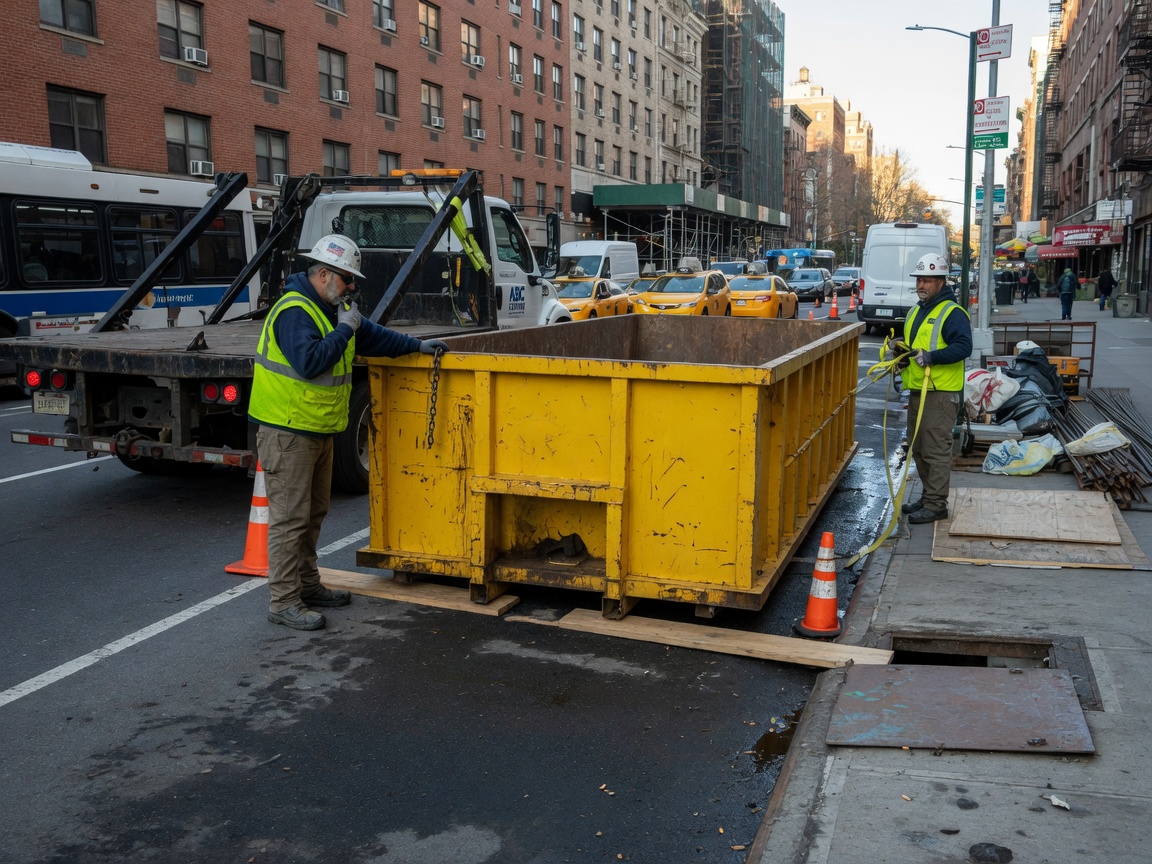
Construction sites in Manhattan's Upper East Side and around Central Park often involve narrow side streets and limited curb space that force smaller 10- or 15-yard containers rather than larger roll-offs. Old pre-war buildings commonly produce mixed loads of brick, plaster, and timber that must be separated on site to avoid overweight fees at transfer stations in New York County. Hot humid summers accelerate odor and pest issues with food-contaminated debris, while winter freezes can lock dumpsters to the pavement if not placed on plywood.
Projects near Times Square or the Empire State Building face strict DOT rules on sidewalk occupancy and require same-day swaps when containers fill quickly from high-rise gut renovations. Proximity to Brooklyn allows our trucks from 240 Water St to reach most Manhattan sites before noon, but rush-hour traffic on the bridges can delay returns, so we schedule buffer time. Cold winters also stiffen hydraulic lines on older trucks, making precise placement on sloped Bronx streets or Brooklyn brownstone alleys more time-consuming than in milder months.
Residential construction in Brooklyn row houses frequently mixes concrete footings with interior drywall, requiring liners to prevent leakage onto asphalt. We advise checking for underground vaults common in New York County before setting a container, as a single misstep can crack historic masonry. Our schedule stays consistent year-round except during heavy snow when we shift to smaller trucks that can navigate uncleared side streets.
Upper East Side co-op rules often limit dumpster hours to weekdays before 4pm, so we coordinate early drops and evening pulls to keep crews moving. Humid summers mean metal debris rusts faster and can stain sidewalks if left too long, prompting us to offer weekly inspections on longer rentals.
Technician insight
In New York the thing that catches most people out with Construction Dumpster Rental is the narrow one-way streets around the Upper East Side and Central Park where a standard truck cannot make the turn without blocking traffic, especially once winter salt and snow narrow the curb further.
Upper East Side brownstone renovation
The crew had filled a 15-yard unit with plaster and timber in two days but the building super required removal before the weekend rush near Central Park. We swapped the container at 7am using our Brooklyn-based smaller truck, kept the load under the DOT limit, and cleared the sidewalk by 8:30 so scaffolding work could resume without fines.
Construction Dumpster Rental Services We Offer
✓Demolition Debris Removal
Handles brick, concrete, and wood from full or partial teardowns in tight Manhattan lots where access is limited to alleyways.
✓Renovation Waste Containers
Sized for brownstone and co-op gut jobs in the Upper East Side, keeping mixed loads under weight limits common on New York County streets.
✓Concrete and Masonry Disposal
Specialized containers with liners for heavy pours and foundation work near Central Park where soil conditions vary block to block.
✓Wood Framing Waste Hauling
Open-top units for lumber and sheathing from residential additions in Brooklyn that avoid the odor buildup seen in humid summer months.
✓Drywall and Insulation Cleanup
Dust-controlled containers for interior work around Times Square high-rises where building rules prohibit open piles on sidewalks.
Construction Dumpster Rental Cost in NY
| Service | Typical Range | What Affects It |
|---|---|---|
| 10-yard construction container | $450–$750 | Common for Upper East Side brownstone interiors; price rises with concrete weight. |
| 15-yard construction container | $550–$900 | Fits most Brooklyn row-house renovations; extra for same-day swaps near Times Square. |
| 20-yard construction container | $700–$1,100 | Used on larger Manhattan sites with curb access; winter placement adds labor. |
| Overweight disposal fee | $75–$150 per ton | Triggered by masonry loads common in pre-war New York County buildings. |
Ranges are typical for NY and confirmed with an exact written quote before any work starts.
How it works
- 1
Site Walk and Sizing
We visit the Manhattan or Brooklyn address to measure access and recommend the right yardage based on the building age and street width.
- 2
Permit Check and Placement
Confirm New York County sidewalk rules and set the dumpster on plywood or blocks to protect pavement, especially near Empire State Building zones.
- 3
Active Monitoring
Check load levels mid-project and offer swaps when heavy concrete or wet debris from humid weather pushes weight limits.
- 4
Pickup and Recycling
Return within the scheduled window, separate metals and wood for Bronx transfer stations, and leave the curb clean.
Pricing
Rates vary by container size, weight, and street access; most Manhattan jobs run higher than Brooklyn due to bridge traffic and permit timing.