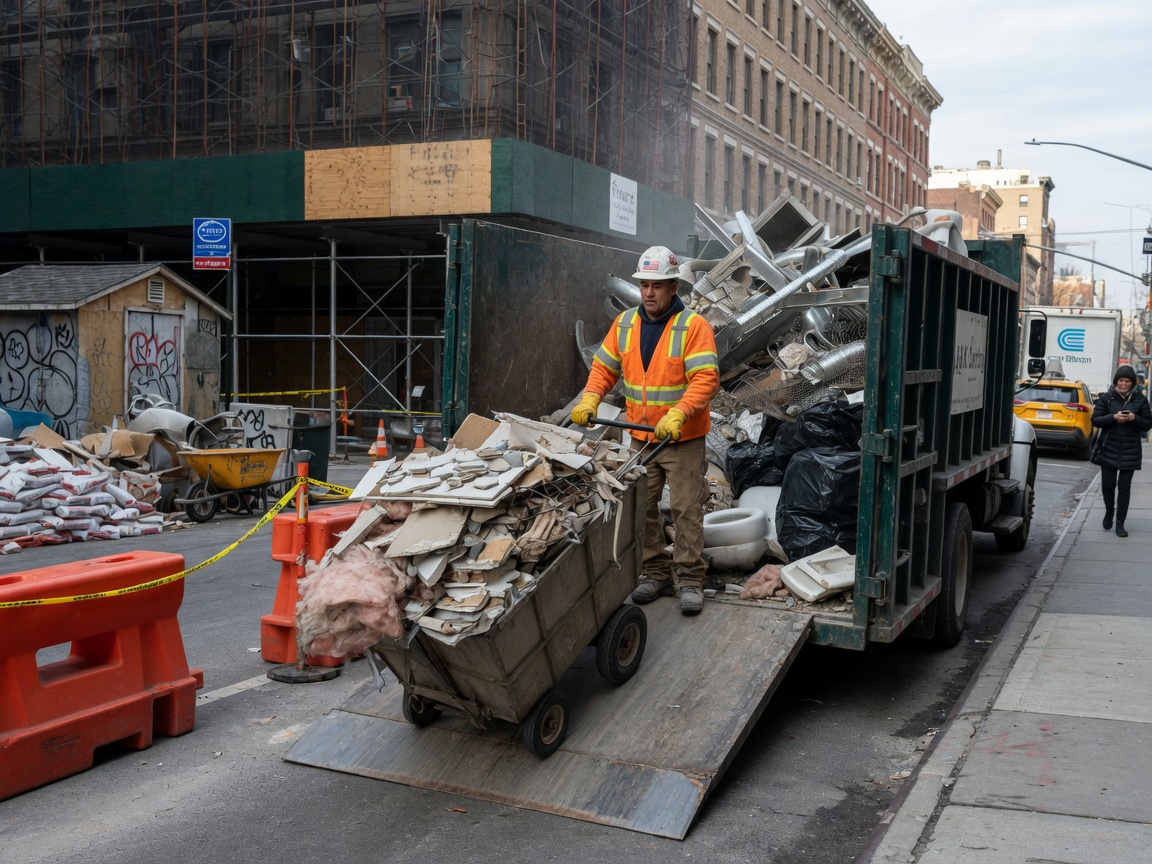
Construction waste removal in New York County often involves mixed loads from older row houses and pre-war buildings common in Manhattan and the Upper East Side. These structures frequently yield brick, plaster, and lath alongside modern drywall and framing lumber. Hot humid summers make open-top containers fill faster with moisture-heavy materials while cold winters bring frozen ground and snow that can block alley access behind Empire State Building or Times Square sites. Permits from the Department of Sanitation are routinely required when placing units on streets near Central Park.
Jobs crossing into Brooklyn or the Bronx add another layer because narrow one-way streets and limited curb space dictate smaller 10- or 15-yard containers rather than the larger roll-offs used in less dense counties. Concrete and masonry debris from sidewalk repairs or basement work must be separated to avoid overweight fees at transfer stations serving New York County. Summer humidity also increases the weight of any wood or insulation left exposed, so same-day swaps are scheduled when forecasts call for heavy rain.
Edge cases include asbestos-containing materials in buildings built before 1980, which must be handled separately under city regulations before the remaining construction debris can be loaded. Terrain around the Brooklyn waterfront at 240 Water St means trucks sometimes stage containers on side streets to avoid low bridges when heading to Upper East Side projects. Winter salt and ice on roads near Times Square can delay delivery by a full day, so schedules are built with buffer time during December through February.
Technician insight
In New York the thing that catches most people out with Construction Waste Removal is trying to stage a 20-yard unit on Upper East Side blocks where the curb is only 18 feet long and winter plows have already narrowed the lane further. We end up using two 10-yard swaps instead, which adds a second delivery charge but keeps the job moving when snow banks block the original spot near Central Park.
Upper East Side Brownstone Gut
A contractor clearing plaster and lathe from a 1910 building two blocks from Central Park needed daily swaps because the narrow service alley filled fast in July humidity. We placed a 10-yard unit at the curb with the required permit, swapped it twice, and hauled the final load after separating clean wood for recycling. The project stayed on schedule despite the cold snap that arrived mid-week.
Construction Waste Removal Services We Offer
✓Renovation Debris Removal
Removes mixed drywall, wood, and fixtures from apartment and brownstone gut renovations common in Manhattan and the Upper East Side.
✓Concrete and Masonry Disposal
Handles broken slabs, bricks, and mortar from sidewalk or foundation work in New York County where weight limits affect container choice.
✓Drywall and Insulation Hauling
Loads and recycles gypsum board and fiberglass from interior fit-outs in Brooklyn and Bronx buildings to keep loads under city weight caps.
✓Wood and Lumber Recycling
Separates clean dimensional lumber and plywood from construction sites near Central Park for reuse instead of landfill fees.
✓Mixed Construction Waste Management
Coordinates single-stream containers for jobs spanning Times Square commercial spaces and residential blocks in the Upper East Side.
Construction Waste Removal Cost in NY
| Service | Typical Range | What Affects It |
|---|---|---|
| 10-yard container | $350–$550 | Tight Upper East Side streets and permit fees often push toward smaller units. |
| 15-yard container | $450–$700 | Common for Brooklyn row-house renovations with moderate debris volume. |
| 20-yard container | $550–$850 | Used in Bronx lots with easier truck access; weight surcharges apply for masonry. |
| Overweight fee | $75–$150 per ton | Triggered by concrete or wet insulation common in humid summer months. |
Ranges are typical for NY and confirmed with an exact written quote before any work starts.
How it works
- 1
Site Assessment
Walk the Manhattan or Brooklyn job site to measure debris volume and note access points around Central Park or narrow Bronx streets.
- 2
Container Placement
Deliver the correct size unit during approved hours while securing any required street permits for New York County locations.
- 3
Loading And Monitoring
Guide crews on separating heavy materials and swap containers when summer humidity or winter snow affects fill rates.
- 4
Haul And Documentation
Remove full loads to licensed facilities and provide weight tickets for projects near the Empire State Building or Times Square.
Pricing
Quotes reflect container size, rental days, and Manhattan permit costs rather than flat rates.