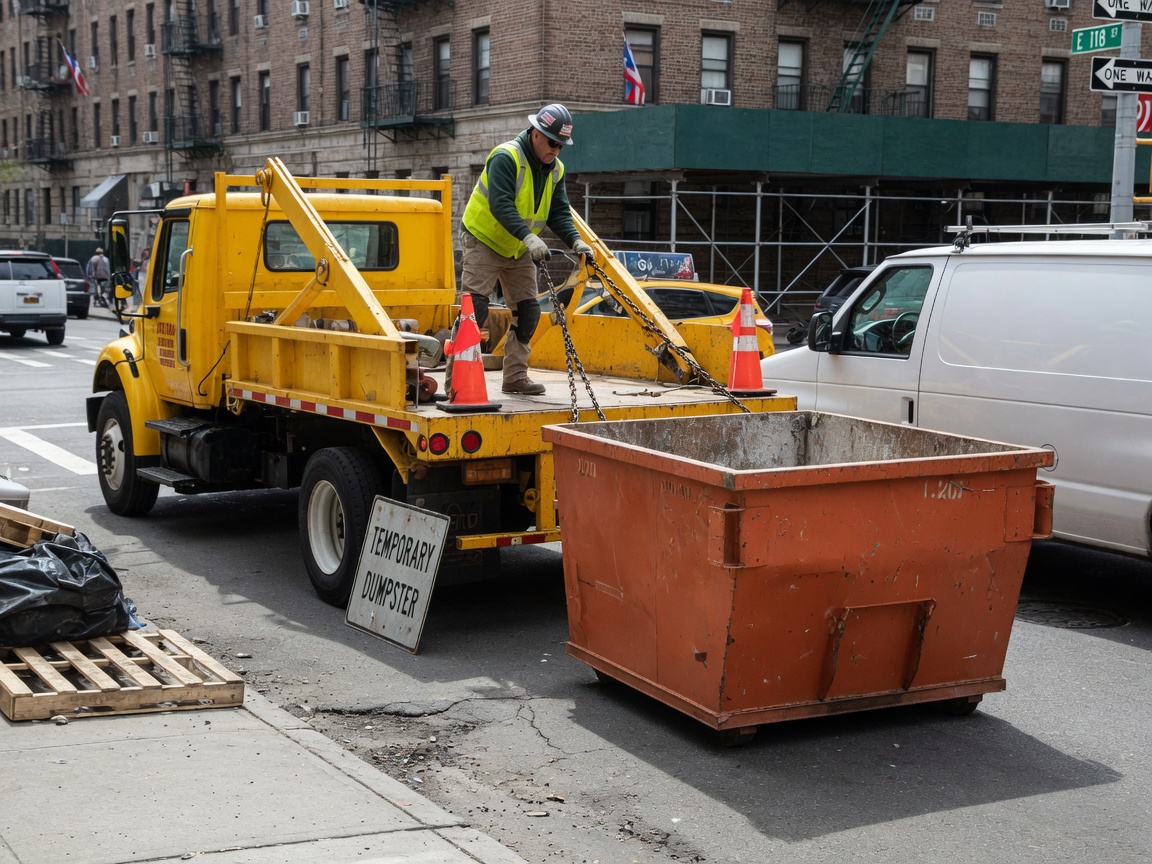
New York County properties, especially pre-war buildings in the Upper East Side and around Central Park, often feature narrow side streets and limited curb access that dictate smaller 10- or 15-yard containers rather than larger roll-offs. Delivery crews must navigate tight turns near the Empire State Building and Times Square where traffic enforcement is strict, so placements usually occur during permitted early-morning windows. Humid summers bring sudden downpours that can turn soil or pavement soft, requiring plywood or boards under the dumpster to prevent sinking or street damage.
Winter cold in New York County freezes ground and creates ice patches that make rolling a loaded container hazardous on sloped Brooklyn streets near the East River. Older brownstone stoops and basement entrances common in Manhattan require careful positioning so the container does not block emergency access or violate sidewalk clearance rules. Temporary rentals here almost always need a Department of Transportation permit when the unit sits on any public right-of-way, and the rental company coordinates the paperwork with the customer before the truck arrives.
Customers in the Bronx and Brooklyn frequently request same-week swaps for ongoing renovation projects where debris volume exceeds initial estimates. The company keeps units staged at the 240 Water St yard so a replacement can reach Manhattan addresses within one business day when weather or permit timing allows. Proper tarping is essential during humid months to control odor and prevent rainwater from adding weight that increases disposal fees at the transfer station.
Technician insight
In New York, the thing that catches most people out with Temporary Dumpster Rental is forgetting that older Manhattan blocks around the Upper East Side have one-way streets and tight curb cuts that force us to use smaller containers or schedule before 7 a.m. to avoid tickets. Winter ice on Brooklyn streets near the yard also makes safe rolling harder than most customers expect.
Upper East Side brownstone gut renovation
The homeowner needed daily debris removal during a full interior demo but the narrow side street had no legal parking zone. We secured the DOT permit, placed a 10-yard unit on plywood, and swapped it twice in five days before winter weather arrived. The site stayed clear and no sidewalk violations were issued.
Temporary Dumpster Rental Services We Offer
✓Residential Dumpster Rental in Manhattan
Right-sized containers for apartment cleanouts and brownstone renovations on the Upper East Side where street space is limited.
✓Construction Site Dumpster Rental
Frequent swap service for contractors working near Times Square and the Empire State Building to keep sites clear of debris.
✓Yard Waste Dumpster Rental
Open-top units for landscaping debris from Central Park-adjacent properties during spring and fall cleanups.
✓Renovation Dumpster Rental in Brooklyn
Weekly exchange service for kitchen and bath remodels in Brooklyn neighborhoods close to the 240 Water St yard.
✓Same-Day Pickup Dumpster Rental
Expedited removal for last-minute jobs in New York County when weather or permit windows close quickly.
Temporary Dumpster Rental Cost in NY
| Service | Typical Range | What Affects It |
|---|---|---|
| 10-yard temporary dumpster | $350–$550 | Most common size for Upper East Side residential jobs; weight limit applies. |
| 15-yard temporary dumpster | $450–$700 | Used for larger construction debris near Times Square; permit adds cost. |
| Street permit fee | $75–$150 | Required for any Manhattan curb placement; handled by the rental company. |
| Extra pickup or swap | $125–$200 | Charged when debris exceeds initial load or timeline changes. |
Ranges are typical for NY and confirmed with an exact written quote before any work starts.
How it works
- 1
Site Assessment
Measure access points and note any slope or overhead wires near the placement spot in Manhattan or the Upper East Side.
- 2
Permit Coordination
File required street-use paperwork with New York City DOT for any public curb location before delivery.
- 3
Delivery And Placement
Drop the container on plywood or boards to protect pavement, especially during summer rain or winter freeze.
- 4
Final Pickup And Disposal
Remove the unit, weigh contents at the transfer station, and return any overage charges to the customer.
Pricing
Rates vary by container size, rental length, and whether a street permit is required.